


A short conflict could trigger price spikes but not a structural shock for the Italian economy
The strategic role of the Strait of Hormuz
Whenever tensions rise in the Middle East, global attention immediately turns to energy markets.
The key chokepoint is the Strait of Hormuz, through which roughly 20-21% of global oil supply flows.
According to the Unimpresa Research Center, however, a conflict lasting three to four weeks would likely cause only a temporary shock rather than a structural energy crisis.
Markets tend to react immediately to geopolitical risk, often before physical flows are actually disrupted. The first effect is typically financial: increased insurance costs, speculative trading in futures markets and higher risk premiums.
If maritime routes remain operational and no prolonged blockade occurs, price spikes tend to fade relatively quickly.
Oil prices: possible spike to $110
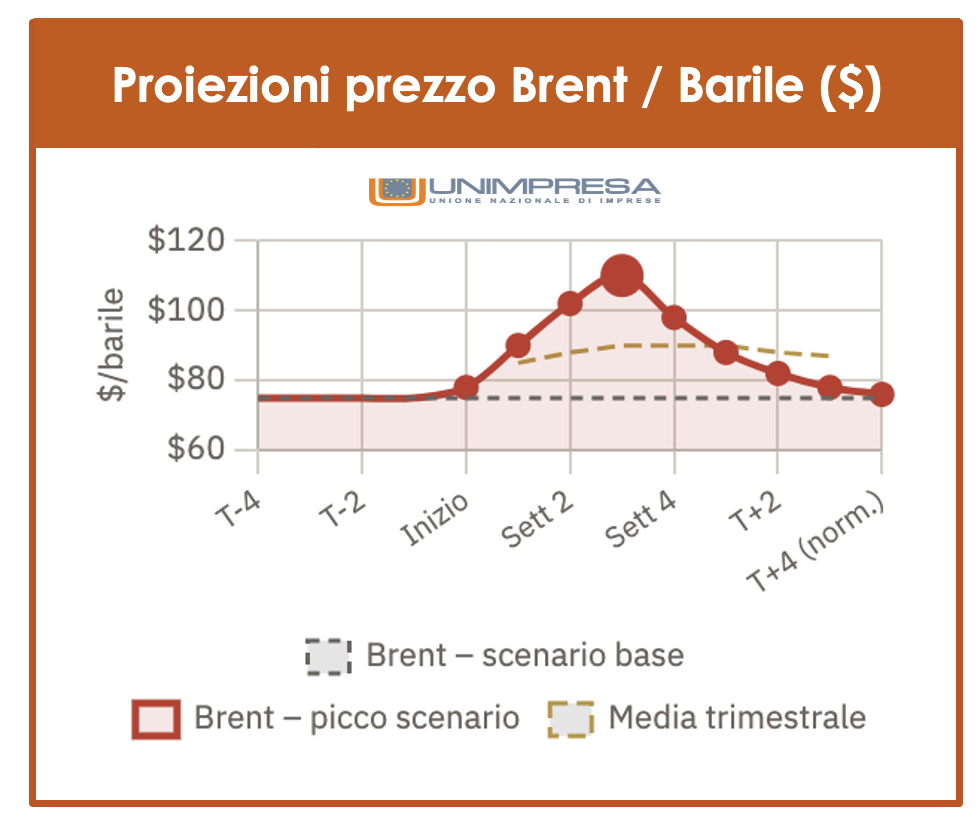
Unimpresa projections suggest a temporary but significant increase in oil prices.
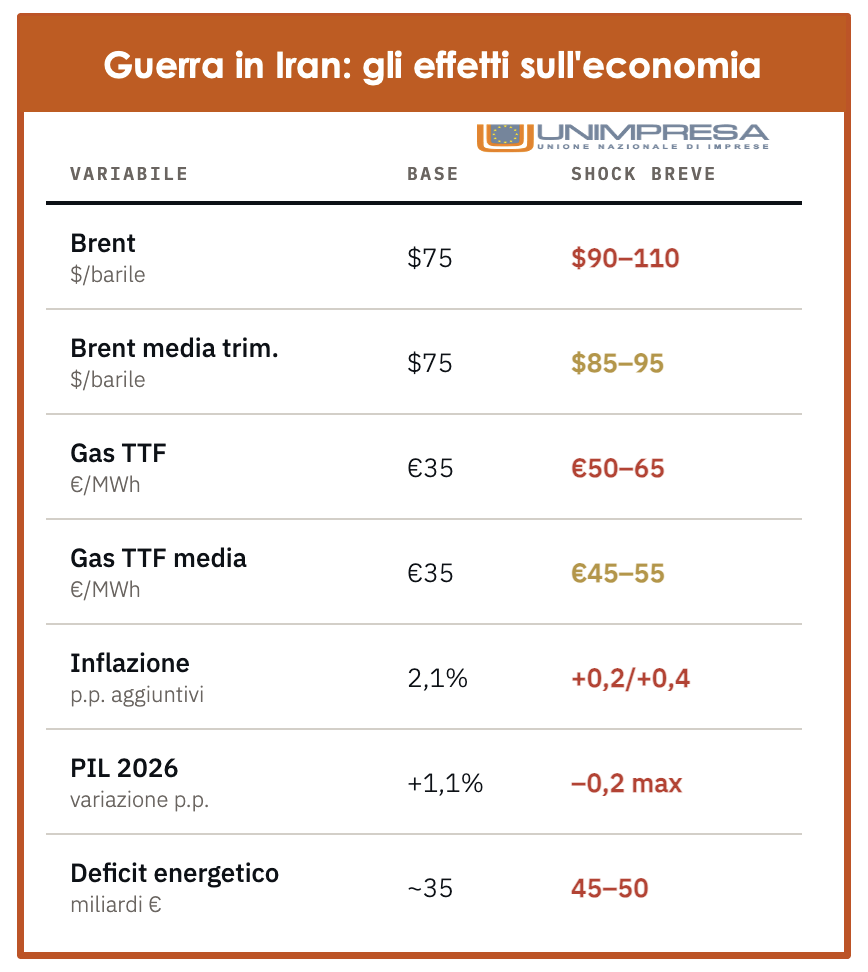
Starting from a pre-crisis Brent price around $75 per barrel, a short conflict could push prices toward $90-$110, representing a 20-45% increase.
However, the key metric for the economy is the average price over time, not the peak. Under a scenario of rapid stabilization, the quarterly average would likely remain around $85-$95 per barrel.
This dynamic reflects what economists call financial overshooting: markets initially overreact to risk before stabilizing once supply disruptions fail to materialize.
European gas: volatility without supply shortages
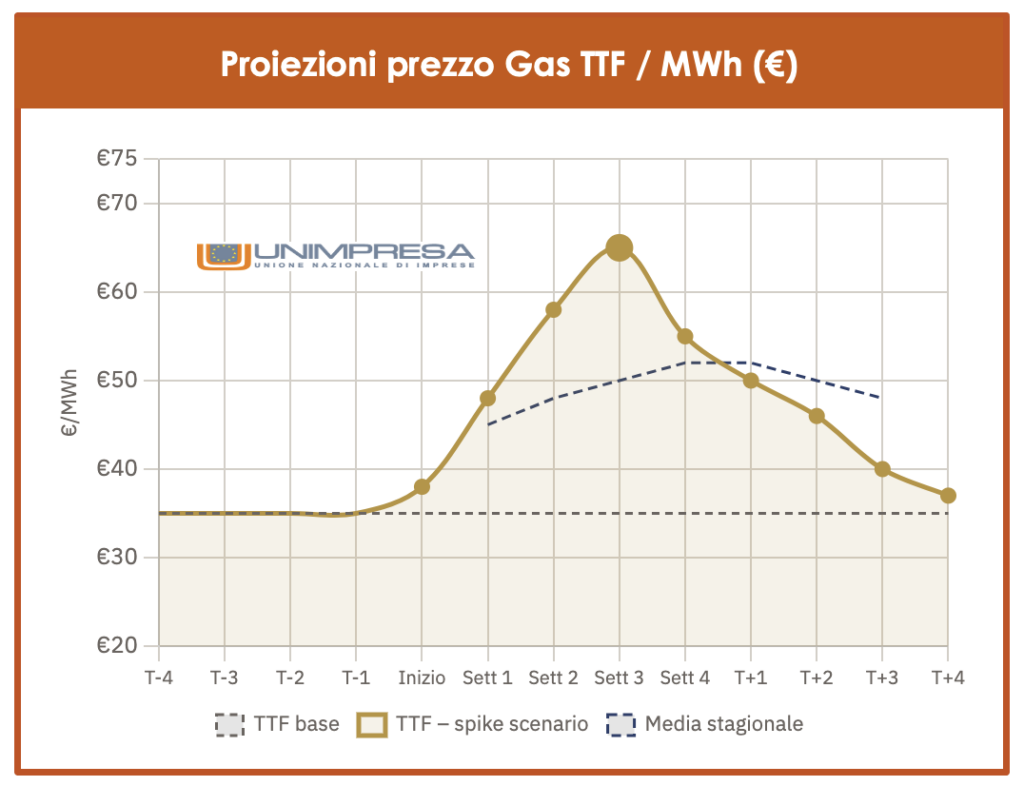
A similar pattern is expected in the European gas market.
With TTF prices around €35 per megawatt hour, a geopolitical shock could temporarily push prices to €50-€65, an increase of 40-80%.
Still, seasonal averages would likely remain lower, between €45 and €55, provided there are no physical disruptions to Qatari LNG shipments or North African gas flows.
Italy consumes about 70 billion cubic meters of gas annually, but its supply mix is now more diversified than during the 2022 energy crisis, thanks to additional LNG infrastructure and alternative suppliers.
Inflation and GDP impact: relatively limited
From a macroeconomic perspective, the impact of a short-lived shock would be modest.
A 30% increase in oil prices for one month would raise Italian inflation by roughly 0.2–0.4 percentage points, compared with a baseline around 2.1%.
Economic growth would also remain resilient.
Italy’s 2026 GDP growth, currently projected at about 1.1%, might decline by at most 0.2 percentage points, still far from recession territory.
The energy trade deficit, typically around €35 billion, might temporarily rise to €45-€50 billion if high prices persisted for a full quarter.
Italian businesses: higher costs but manageable
For companies, particularly energy-intensive sectors, the main effect would be higher energy price volatility.
However, this would not necessarily translate into a systemic profitability crisis.
Many firms today rely on long-term supply contracts or indexed pricing mechanisms, which soften the immediate impact of spot market fluctuations.
Severe scenarios involving employment losses or industrial competitiveness would require a prolonged conflict or regional escalation.
Duration is the key factor
Ultimately, the difference between a temporary shock and a structural crisis lies in how long the conflict lasts.
A short conflict would mainly produce financial price spikes, followed by gradual stabilization.
As Giuseppe Spadafora, Vice President of Unimpresa, notes:
“If the conflict lasts only a few weeks, we are facing volatility rather than a structural shock. Oil and gas prices may spike, but the yearly impact would remain manageable.”
Still, he warns that vigilance is necessary:
“Businesses, especially energy-intensive industries and SMEs, need stability and adequate hedging tools. Continuous monitoring and timely interventions are essential.”
Prudence, in other words, remains the best safeguard for competitiveness.
This post is also available in: